



If your house no longer fits the way your family lives, moving is not the only answer. General home remodeling, such as a better layout, updated rooms or repairs to aging systems, can make the same property work well for many more years. The hard part is deciding what to fix first and how to do it without overspending or living in chaos.
General home remodeling means improving the rooms and systems of an existing house to fix problems, improve how the space works or refresh how it looks. For Houston homeowners, a good home remodeling project starts with a clear scope, honest priorities and a contractor who understands how each part of the work connects to the next.
What Does General Home Remodeling Include?
General home remodeling covers changes to existing rooms, finishes, layouts and building systems. A project can be as small as updating one room or as large as reworking the whole house.
Common work in general home remodeling includes:
- Interior updates: flooring, paint, trim, doors, lighting and finishes.
- Kitchen and bathroom upgrades: cabinets, fixtures, storage, countertops and layout changes.
- Layout changes: opening up rooms, changing how a room is used or removing interior walls.
- System upgrades: electrical, plumbing or HVAC work when the project calls for it.
- Whole home updates: coordinated changes across several rooms so the house feels consistent.
It helps to separate general home remodeling from routine maintenance. Swapping a worn faucet is a small fix. Moving a drain line or taking out a wall that carries weight needs planning, the right trades and often a permit.
When the changes reach more than a room or two, it usually makes sense to plan everything together. Our full home remodeling page explains how a coordinated project is scoped and managed.
Keep in mind that remodeling does not add square footage by itself. Building out or up is a different type of construction with its own design and approval steps. Knowing exactly what your home remodeling construction project includes is the first step toward choosing the right improvements.
How Should You Set Priorities for a General Home Remodeling Project?
Start with safety and building problems, move on to daily function, and leave cosmetic upgrades for last. This order keeps nice finishes from pulling attention and money away from repairs that matter more.
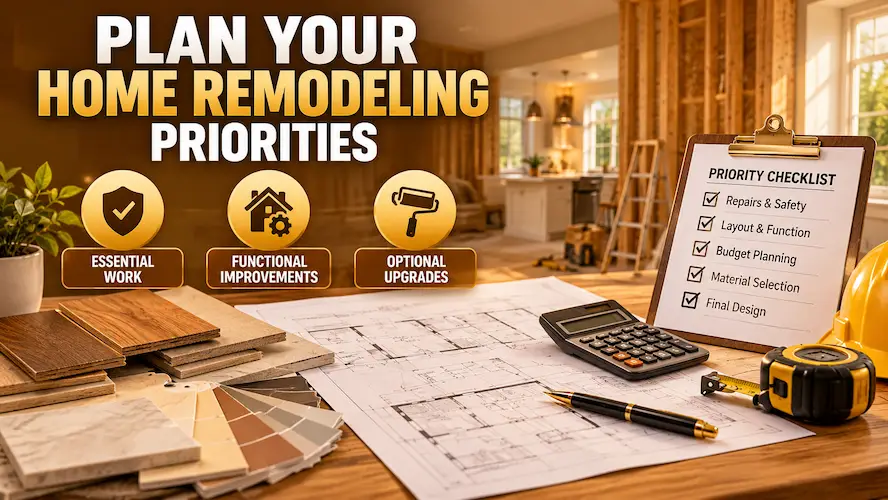
Before you pick any materials, sort your goals into three groups:
- Essential work: water leaks, rot, damaged materials, unsafe wiring or failing systems.
- Functional improvements: better storage, room flow, lighting and accessibility.
- Optional upgrades: decorative finishes, premium fixtures and appearance changes.
Then build a general home remodeling budget around the defined scope, labor, materials and a cushion for surprises. Houston has plenty of older homes, and wet walls, outdated wiring or old plumbing often only show up once the work opens things up. If you want a starting point for numbers, our guide to the cost to remodel a home in Houston breaks down what drives the total.
Write down what you must have and what you could postpone. If the first estimate comes in high, your contractor can then suggest trade offs instead of guessing. Also think about how long you plan to stay. A family settling in for the long haul should lean toward durable materials and spaces that can adapt as the household changes.
When the project changes the layout or needs drawings, bring in professionals early. Our architectural design services in Houston cover plans for projects like this. Clear priorities let you make smart trade offs before decisions become expensive to reverse.
Which General Home Remodeling Option Fits Your Home and Goals?
The right option depends on whether you need to fix one room, improve several connected spaces or gain more usable space. Matching the scope of your general home remodeling to the real problem keeps you from paying for work that does not solve it.
| Remodeling Option | Best For | Main Consideration |
|---|---|---|
| Single room remodel | One outdated or poorly working room | Keep the scope focused |
| Multiple room remodel | Several connected improvements | Coordinate trades and finishes |
| Whole home remodel | Widespread changes across the house | Plan everything as one project |
| Room or home addition | A real need for more space | Check structure, site and approvals |
| Garage conversion | Turning existing garage space into living space | Check access, insulation, ventilation and permitted use |

If one room is the main frustration, a focused project is often the most sensible choice. Many homeowners begin with kitchen remodeling because it affects daily life more than any other room.
If your rooms simply cannot hold your family anymore, rearranging the layout will only go so far. In that case a home addition may solve the problem more directly than another remodel.
Another way to gain space is to reuse what you already have. A garage conversion can add a bedroom, office or living area, as long as the space is checked for its new use first. Choose the smallest scope that fully solves your problem, unless coordinated work clearly saves time or money.
What Should Houston Homeowners Check Before General Home Remodeling?
Before work starts, confirm which jurisdiction your home falls under, check the condition of the house and find out which permits apply. Rules differ between the City of Houston, Harris County and the other cities in the Greater Houston area.
Start with these checks:
- Permits and approvals: ask the building department that covers your address whether your work needs permits, plan review or inspections. Inside the city, the Houston Permitting Center is the place to start.
- Structural conditions: have wall changes, foundation concerns or sagging floors evaluated by a qualified professional. If you are thinking about opening a kitchen, read our post on kitchen wall removal in Houston first.
- Moisture and drainage: look for stains, soft spots or musty smells and fix the cause before new walls and floors cover it up.
- Flood exposure: check FEMA flood maps for your address. In a floodplain, a large remodel can trigger stricter rules, so ask the permit office how the work is evaluated.
- Deed restrictions and HOA rules: Houston has no traditional zoning, so deed restrictions and association rules often decide what you can change, especially on the exterior.
- Older home hazards: houses built before 1978 may contain lead paint, and some older materials may contain asbestos. Ask your contractor how they handle both.
Do not assume that every interior update in general home remodeling needs a permit, and do not assume that work inside your own house is exempt either. Structural changes and work on electrical, plumbing or mechanical systems commonly require review. Also think about how the project affects neighbors, access and drainage around the house.
Settle site conditions and approval questions before you lock in a schedule or order materials made for the project.
How Do You Choose a Reliable Home Remodel Service?
When hiring for general home remodeling, compare experience, written proposals, communication and how each company manages the job. A clear agreement is worth more than a low price on an incomplete scope.

Ask every contractor you interview:
- What is included in the estimate, and what is left out?
- Who handles subcontractors, materials, permits and inspections?
- Can you provide proof of insurance and references from recent jobs?
- How are surprises and change orders handled?
- How will you report progress, schedule changes and payment milestones?
Put the estimates side by side. One may include demolition, hauling away debris, prep and finishing, while another leaves some of that to you. Those gaps often explain why prices differ.
Get a written contract that spells out the scope, payment terms, schedule, responsibilities and the way changes get approved. On licensing, Texas does not issue a general contractor license, but electricians, plumbers and HVAC technicians must be licensed by the state. Ask to see the licenses of the trades working on your house.
A contractor who is great at room updates may not be the best fit for general home remodeling that involves structural work or many trades. You can browse our full list of home remodeling services to see what each type of project involves, or read how we approach home remodeling in Spring, TX. Pick the contractor whose proposal explains how the work will be done, not just how the finished rooms will look.
What Happens Before General Home Remodeling Construction Begins?
Before the crew arrives you should have an agreed scope, finished design decisions, a signed contract and a plan for approvals and site access. These steps prevent most of the confusion that shows up once work is underway.
A typical sequence looks like this:
- Consultation and assessment: discuss goals, current conditions and the intended scope.
- Design and planning: finalize layouts, specifications and material selections.
- Approvals: confirm permits, reviews and inspections.
- Scheduling: line up crews, deliveries and work areas.
- Household preparation: protect belongings, plan access and decide how you will handle noise, dust and rooms you cannot use.
Not every job follows this exact order. A cosmetic refresh may need little design work, while structural changes can require drawings and an engineer. Before demolition, take photos of existing conditions and agree on how the contractor will tell you about anything unexpected. Keep copies of contracts, approved changes, product selections and inspection records.
If your plans are really about adding space, the home addition process has its own planning steps worth reading. A well prepared project starts with agreed responsibilities and informed decisions before demolition begins.
Frequently Asked Questions
Can general home remodeling be done in phases?
Yes. Phasing works well when the order follows the work itself. Handle structural repairs and building systems first, then finish surfaces. Agree on what each phase covers, what it costs and when it happens. Some jobs are cheaper and less disruptive when connected work is done together, so compare both options with your contractor.
What documents should I keep during a remodel?
Keep the signed contract, approved plans, estimates, change orders, receipts, product specifications, permits and inspection records. Store digital copies in one folder. They settle questions about what was agreed and help with future repairs or when you sell the house.
What should I do if problems appear after demolition?
Pause the affected work and ask the contractor to explain the problem and the options. Request a written change order with the new scope, cost and schedule before approving anything extra. If you see structural damage or a safety issue, get a professional assessment instead of covering it with new finishes.
What should a general home remodeling contract include?
A contract should state the work, materials or allowances, exclusions, payment terms, schedule, responsibilities and how changes are approved. It should also explain how delays, disputes and unfinished work are handled. Do not sign anything unclear, and make sure verbal promises are written down.
How can I reduce disruption during general home remodeling?
Plan a work area, protect furniture and agree on access, dust control and how you will communicate with the crew. If a kitchen or bathroom will be out of use, set up a temporary option first. This matters most with bathroom remodeling, where water may be off for a few days. Ask about noisy work days, deliveries and utility shutoffs so everyone can plan ahead.
Final Thoughts on General Home Remodeling
Good general home remodeling begins with knowing what needs to change and why. Fix essential problems first, choose a scope that fits your household, check local requirements and compare contractors using detailed written proposals. Those steps help you avoid costly surprises and keep the finished work in line with your goals.
Ready to talk through your plans? Visit Houston Builder Pro and let us help you find the scope that fits your home.