



Every year, thousands of Houston homeowners start a kitchen remodel with a signed estimate in hand and end up paying thousands more than that number by the time the project wraps. The gap almost never comes from a dishonest contractor. It comes from a scope that was never fully defined, an allowance that was set too low, or a change order that nobody explained clearly before work started.
Picking a kitchen remodeling contractor in Houston isn’t really about finding the lowest number on a page. It’s about finding a team that can coordinate demolition, plumbing, electrical, structural work, permitting, and inspections and explain exactly how they’ll do it before you ever sign a contract. Here’s how to evaluate your options the right way.
Need a Houston team with a decade of remodeling experience behind them? Houston Builder Pro has been renovating kitchens throughout the Houston area for 10+ years. Reach us at (713) 551 4090 or visit 2200 North Loop West, Suite 105, Houston, TX 77018.

Step 1: Nail Down Your Scope Before You Ask for a Single Bid
The single biggest mistake homeowners make is requesting estimates before deciding what they actually want done. Without a defined scope, two contractors can walk through the same kitchen and price two completely different projects, and you won’t be able to tell why one number is higher than the other.
Are you refreshing the space with new cabinets, countertops, flooring, and paint? Or are you reworking the layout, moving a wall, relocating plumbing lines, adding circuits, changing where the sink or range sits? The second category demands a contractor who’s comfortable managing multiple trades on one job site, not just installing finishes.
If you’re not sure which category your project falls into, it’s worth reviewing the signs you need a kitchen remodel first. Homeowners weighing a DIY approach for parts of the job may also benefit from the kitchen remodeling DIY guide, which breaks down what actually requires professional coordination versus what doesn’t.
Planning to take out a wall as part of the layout change? That’s not standard demolition. Check the kitchen wall removal in Houston guide to understand the added planning it requires. And if your project is based in Spring, the home remodeling in Spring, TX resource offers useful local context.
Once your scope is locked in, every contractor is pricing the same job, which is the only way to compare estimates fairly.

Step 2: Vet Experience, Insurance, and Who’s Actually Doing the Work
Texas doesn’t issue a statewide general contractor license, which means “licensed contractor” isn’t a guarantee the way it is in some other states. The Texas Governor’s Business Permit Office recommends checking state and local licensing requirements directly rather than assuming.
That puts more weight on you to ask direct questions:
• How many years has this company specifically handled kitchen remodels?
• Can they show recent projects with a similar scope to yours?
• Who’s licensed to do the electrical and plumbing, in house or subcontracted?
• What insurance does the company carry, and can they provide proof?
• Who takes responsibility for scheduling and passing inspections?
Electrical work in particular is regulated. Texas requires non exempt electrical work to go through a licensed electrical contractor, and HVAC changes can trigger separate licensing requirements through the Texas Department of Licensing and Regulation.
Houston Builder Pro has spent more than 10 years working through exactly these questions with Houston homeowners, which is part of why experience backed answers matter more than a polished sales pitch.
The contractor worth hiring isn’t the cheapest one. It’s the one who can name, without hesitating, exactly who does each part of your job.

Step 3: Read Portfolios for Substance, Then Call the References
A photo gallery shows you the finished kitchen. It doesn’t show you what the six weeks before that photo were like. That’s what references are for.
When you’re looking through a contractor’s past work, don’t just look at style. Look at complexity. A company that mostly does cabinet swaps and countertop installs isn’t automatically equipped to handle a layout change involving plumbing relocation and structural framing. Check whether their portfolio includes:
• Kitchens comparable in size and layout to yours
• Demolition heavy projects
• Structural or layout modifications
• Electrical and lighting upgrades
• Plumbing relocations
• Finish level work that matches what you’re expecting
Then actually call two or three references. Ask less about whether they liked the final kitchen and more about how the contractor behaved when something unexpected came up, because on a remodel, something usually does. Did they explain the issue clearly? Did they document the cost and timeline impact before proceeding? Was the crew organized on site?
A portfolio proves capability. A phone call to a past client proves how that capability actually plays out under pressure.
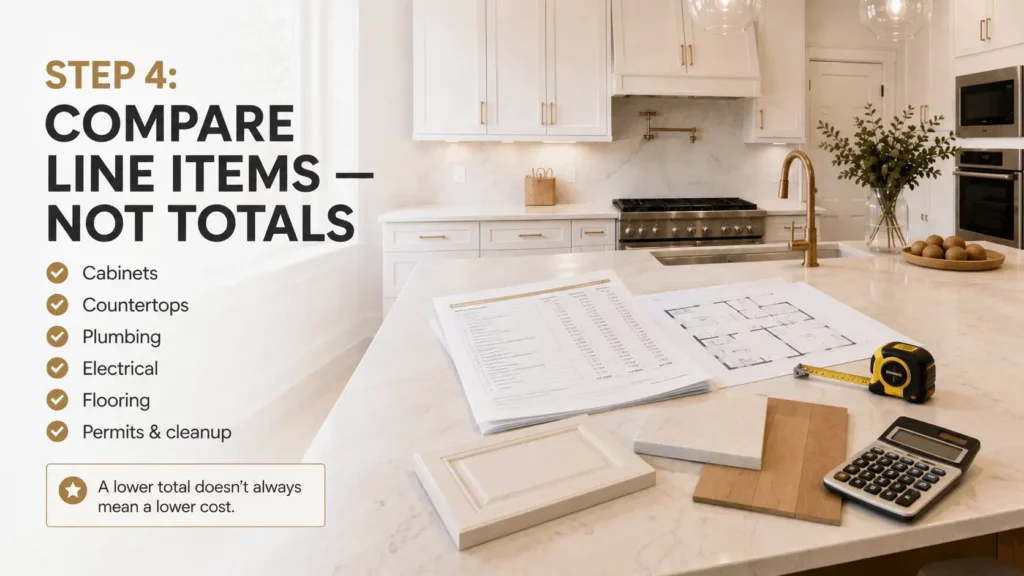
Step 4: Compare Line Items, Not Bottom Line Totals
Two estimates that look $8,000 apart might actually be pricing different scopes entirely. The only way to know is to compare them item by item.
Estimate Area: Demolition
What’s being removed and how it’s disposed of
Estimate Area: Cabinets
Brand, material, style, installation labor
Estimate Area: Countertops
Material, fabrication, installation
Estimate Area: Plumbing
Fixtures, relocation, connection work
Estimate Area: Electrical
Outlets, circuits, lighting, installation
Estimate Area: Flooring
Material, subfloor prep, installation
Estimate Area: Permits
Who’s responsible, and are the costs included
Estimate Area: Cleanup
Debris removal, final site cleanup
Estimate Area: Changes
The process for pricing and approving additional work
For a closer look at what drives Houston remodeling budgets, the Houston kitchen remodeling cost guide breaks down the major cost factors.
Pay particular attention to allowances, the placeholder amount an estimate sets aside for items you haven’t finalized yet, like cabinet hardware or a specific fixture. A contractor using a low allowance can make their bid look better on paper while your actual final selections push the real cost well past it.
Also ask directly how change orders are handled. If a contract doesn’t spell out how additional work gets priced and approved, you’re exposed to disputes later.
The estimate worth trusting is the one you can actually explain to someone else, not just the one with the smallest total.
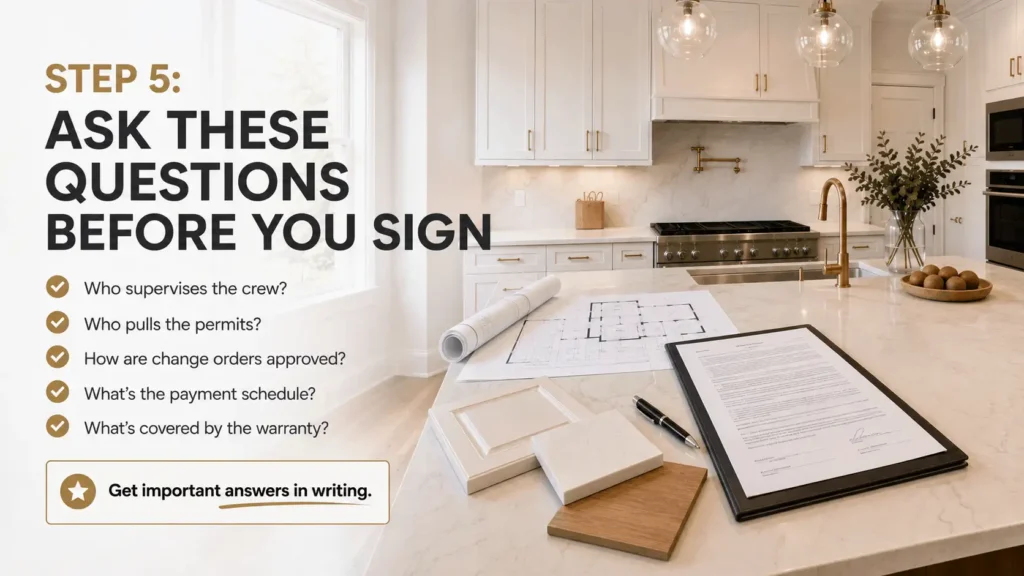
Step 5: Ask These Questions Before You Sign Anything
Get these answers in writing, not just verbally, before the contract is finalized:
• Who is my day to day point of contact?
• Who supervises the crew on site?
• Which parts of the job are subcontracted, and to whom?
• Who pulls permits and schedules inspections?
• What’s the process if hidden damage turns up mid demo?
• How exactly are change orders approved?
• What does the payment schedule look like?
• How will you notify me of schedule changes?
• What’s included in cleanup?
• What warranty covers the finished workmanship?
It’s also worth asking what happens if a material runs into a supply delay or gets discontinued mid project, not because you expect it to happen, but because how a contractor answers tells you how they handle problems in general.
Communication matters more during a kitchen remodel than almost any other room renovation, simply because the kitchen is often unusable for stretches of the project. A contractor who flags issues early prevents small surprises from becoming expensive ones.
Before you sign, you should understand not just what’s being built, but how the builder handles it when plans inevitably shift.
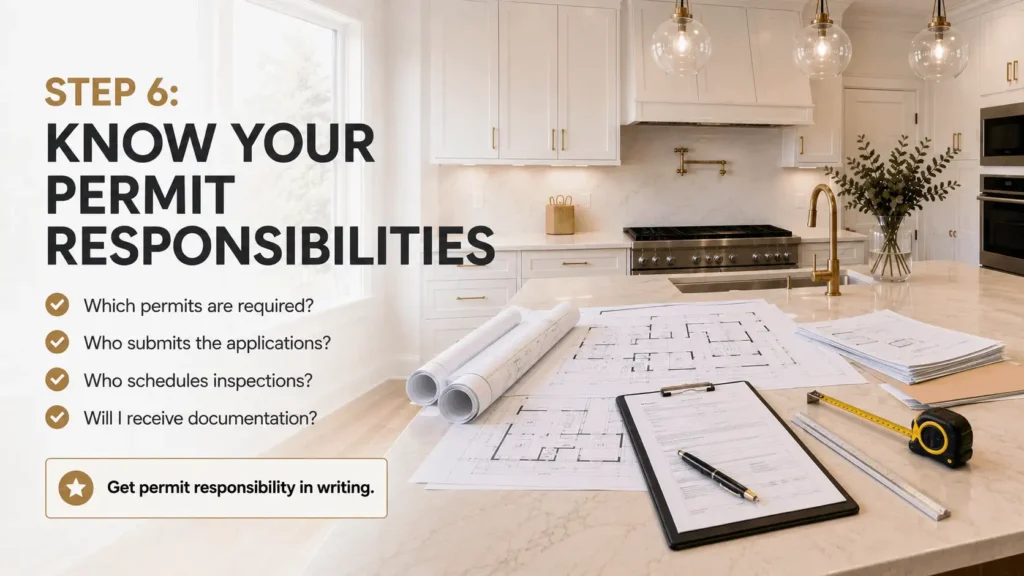
Step 6: Understand Who’s Responsible for Houston Permits
Permit requirements shift depending on project scope, so confirm directly with your local building authority which approvals apply to your job. The City of Houston’s Building Code Enforcement handles construction code enforcement, and the Houston Permitting Center manages permitting and inspections.
If your remodel touches electrical, plumbing, mechanical systems, or structural elements, you’re likely looking at specific permit and inspection requirements. Before demolition starts, ask your contractor:
- Which permits does my specific project require?
- Who’s submitting the applications, you or them?
- Who’s scheduling the inspections?
- Will I get documentation showing the work passed?
Be cautious of any contractor who suggests skipping permits to save time or money. Those requirements exist to confirm the work meets code. Skipping them can create real problems later, especially when you sell the home.
Get permit responsibility in writing before the first wall comes down.
Red Flags Worth Walking Away From
None of these guarantee a bad experience on their own, but together they’re worth taking seriously:
• An estimate with almost no line item detail
• A price quoted before scope is even discussed
• Pressure to sign on the spot
• Vague or evasive answers about insurance or subcontractors
• No relevant project examples to show you
• Fuzzy answers about who handles permits
• No defined process for change orders
• Verbal changes to terms instead of written documentation
• An unusually low price with no explanation for the gap
A rock bottom bid usually isn’t a bargain. It’s often a sign that something got left out of the scope.
How clearly a contractor communicates before the contract is signed tells you a lot about how they’ll communicate once the job is underway.
Frequently Asked Questions
Should I hire a contractor before picking out cabinets?
Generally yes. Bringing the contractor in early lets them confirm measurements and flag layout or installation issues before you’ve already ordered materials.
Can I still live in my house during the remodel?
Most homeowners can, depending on the project’s size and how long the kitchen will actually be out of commission. Ask upfront how dust, noise, and daily access will be managed.
How early should I start reaching out to contractors?
Start well before you want demolition to begin. You’ll need time to define scope, gather multiple estimates, finalize selections, and sort out permitting. None of which should be rushed.
Who buys the appliances, me or the contractor?
Get this in writing. Appliance dimensions affect cabinetry, electrical, plumbing, and ventilation planning, so the decision needs to happen early, not after cabinets are ordered.
What if the crew finds hidden damage after demo starts?
It should be documented and discussed before any additional work proceeds. What was found, what it costs to fix, and how it impacts your timeline should all run through the agreed change order process.
Does the contractor need to offer a written warranty?
Ask for one, and read it before signing rather than assuming it’s standard. Keep it with your other project paperwork once the job wraps.
Conclusion
Finding the right kitchen remodeling contractor in Houston comes down to scope clarity, verified experience, honest references, line item estimates, and clear answers on permitting and change orders, not the lowest number on a page. If your kitchen project is part of a bigger renovation, it may make sense to look at full home remodeling in Houston rather than treating the kitchen alone. For a kitchen focused project, reviewing available kitchen remodeling services is a good next step.
Before you sign with anyone, make sure you can answer one question with confidence: Do I know exactly what’s being built, who’s building it, and how changes will be handled along the way?
Talk to Houston Builder Pro
Houston Builder Pro has spent 10+ years remodeling kitchens throughout the Houston area, with the exact approach outlined above: a clearly scoped estimate, transparent line item pricing, and a direct line of communication from the first demo day to the final walkthrough.
📞 (713) 551 4090
📍 2200 North Loop West, Suite 105, Houston, TX 77018
Also serving: Pasadena, Richmond, Tomball, Spring, Katy, Pearland, Friendswood, Stafford, Sugar Land, Missouri City, Texas City, The Woodlands, Baytown, Humble, League City, Kingwood, Bellaire, Webster, and Seabrook.
Call (713) 551 4090 for a free consultation on your kitchen remodel.