


Adding another bathroom makes daily life easier, especially when a growing family shares limited space. Before construction begins, you need to know what the work involves and what it may cost.
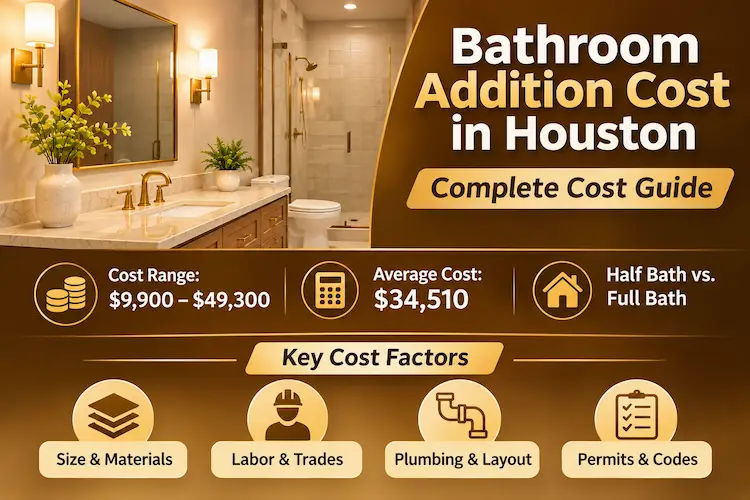
The bathroom addition cost in Houston typically falls between $9,900 and $49,300 for a full bathroom. The final number depends on size, plumbing access, construction method, and finish quality. A simple half bath needs less work than a new bathroom with a shower and tub, and knowing that difference helps you set a realistic budget.
If you are still deciding between a new space and an upgrade, our bathroom remodeling services cover improving an existing room, while an addition creates a completely new functional space.
How Much Does a Bathroom Addition Cost in Houston?
A typical Houston range for a full bathroom is $9,900 to $49,300. Smaller conversions can come in below that, and large primary bathrooms can go above it. These figures are planning estimates, not fixed quotes.
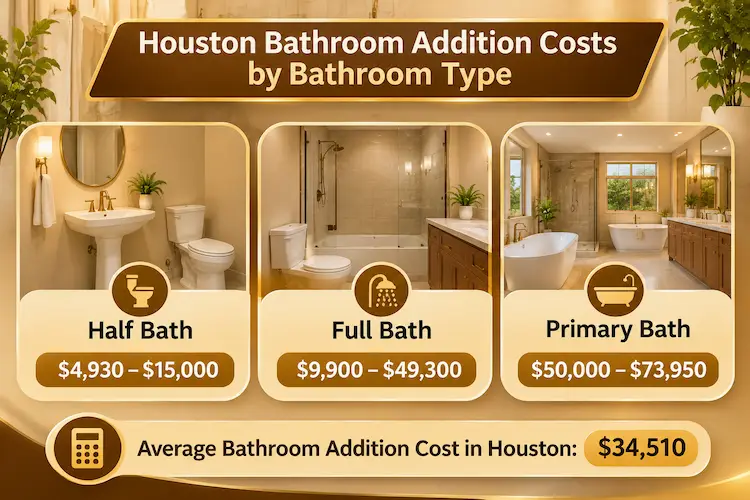
Average Bathroom Addition Cost in Houston
The average bathroom addition cost in Houston is about $34,510, with a much wider spread across all project types, from roughly $4,930 to $73,950. As a general rule, converting existing space runs about $200 to $250 per square foot, while a true addition runs about $400 to $550 per square foot.
| Cost Item | Houston Estimate |
|---|---|
| Full bathroom addition | $9,900 to $49,300 |
| Average bathroom addition | About $34,510 |
| Overall range across all project types | $4,930 to $73,950 |
| Permits and inspections | $200 to $600 |
| Bathroom remodeler labor rate | $50 to $125 per hour |
These are planning estimates. Actual prices depend on scope and specifications.
Interior Conversion or Exterior Addition?
Your bathroom addition estimate depends heavily on whether you are converting space you already have or extending the footprint of your home. Common scenarios include:
- Converting a closet, spare room, or hallway space near existing plumbing.
- Creating a bathroom inside the current floor plan.
- Building an exterior addition with new foundation and framing.
- Adding a bathroom as part of a larger bedroom expansion.
An exterior build costs more because it adds framing, roofing, exterior finishes, and foundation work. If you are weighing a larger project, compare these numbers with home addition cost per square foot in Houston. For a compact build, our guide to small home addition costs is a useful reference.
The best starting point is deciding whether your project is an interior conversion or a true addition.
Is a Half Bath or Full Bath Cheaper to Add?
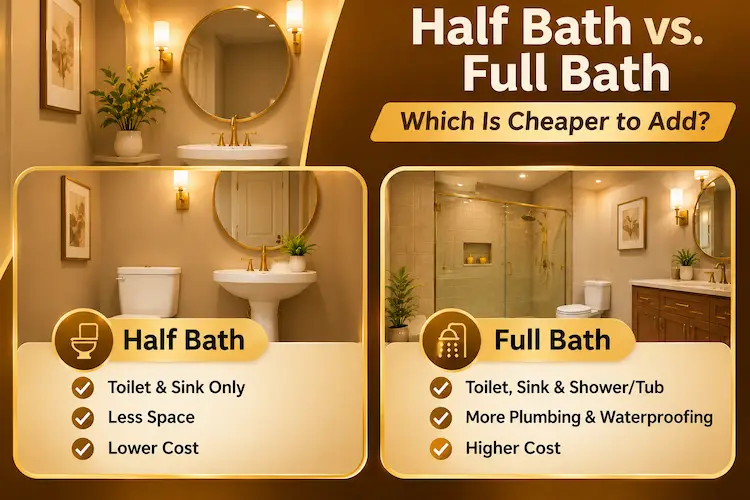
A half bath is cheaper. It has a toilet and sink only, so it needs less space, fewer materials, and no waterproofed shower area. A full bathroom adds a shower or tub, more plumbing connections, and waterproofing, which raises both labor and material costs.
Half Bathroom
A half bath suits spots where guests and family pass through often, such as:
- Near living and dining areas.
- Close to guest bedrooms.
- Next to a home office.
- On the main floor of a two story home.
Full and Primary Bathrooms
A full bathroom includes a toilet, sink, and a shower, tub, or both. A primary bathroom usually adds more space, upgraded fixtures, and extra storage. Double vanities, walk in showers, custom cabinetry, and freestanding tubs all push the budget higher.
If you are planning a separate living unit rather than one extra bathroom, that is a different project. Our ADU construction service covers the added living space requirements.
Choosing the bathroom type before you pick finishes keeps the budget under control.
What Drives the Cost of Adding a Bathroom?
Labor, materials, plumbing, and the amount of new space are the biggest cost drivers. Labor often makes up the majority of the total for a bathroom addition in Houston.
Size and Materials
Larger rooms need more flooring, wall finishes, waterproofing, and sometimes extra framing. Material choices make a noticeable difference:
- Flooring: porcelain tile and other durable surfaces have different price and maintenance profiles.
- Wall finishes: tile coverage and waterproofing requirements change installation costs.
- Vanities: stock units usually cost less than custom cabinetry.
- Fixtures: basic toilets, sinks, and faucets cost less than premium models.
Pick materials that balance appearance, durability, moisture resistance, and upkeep. Houston’s humidity makes that last point especially important.
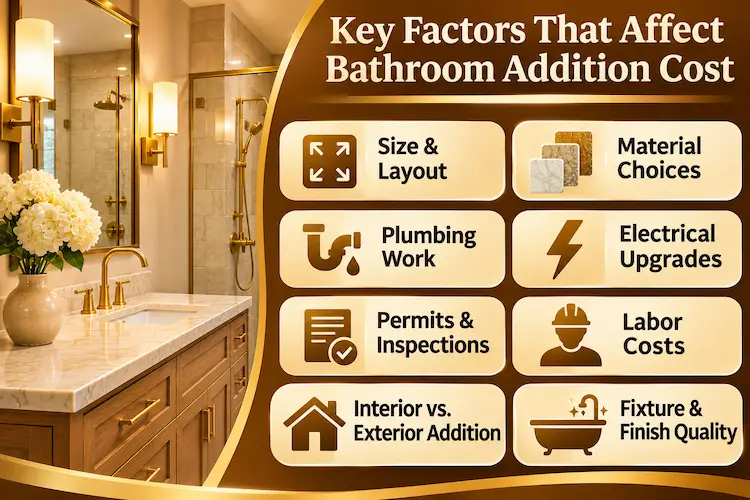
Labor and Trades
A new bathroom usually involves several trades working in sequence:
- A general contractor to coordinate the project.
- A plumber for water supply and drainage.
- An electrician for wiring, lighting, and outlets.
- A carpenter for framing and structural work.
- A tile installer for floors and shower surfaces.
- A painter and finish crew for final details.
Experienced contractors also plan the waterproofing membrane, ventilation, and fixture installation before any surfaces are finished. Settling material selections and trade needs early prevents expensive changes mid project.
How Do Plumbing and Layout Affect the Budget?
Plumbing location is one of the biggest swing factors. A bathroom placed near existing supply and drain lines costs less than one that needs new connections run across the house.
Existing Plumbing Access
Before finalizing a layout, a contractor will check:
- The distance to existing water supply lines.
- Access to the main drain.
- Whether a suitable drain connection is available.
- Venting needs for each fixture.
- Whether the sewer connection can handle the added load.
Placing the bathroom next to a kitchen, laundry room, or another bathroom often simplifies utility access, though the existing lines still need to suit the new fixtures. Plumbers in Houston charge roughly $60 to $130 per hour, so every extra foot of pipe adds up.
Slab Foundations
Many Houston homes sit on slab foundations. Adding a drain beneath an existing slab can require concrete cutting, trenching, new pipe, and slab restoration. That makes the bathroom addition cost higher than a project where plumbing is already within reach. If the slab itself has issues, our foundation work team can assess it before you commit to a layout.
Looking at plumbing access first keeps your design realistic.
Which Permits and Inspections Should You Budget For?
Most bathroom additions in Houston need permits for plumbing, electrical, and structural work. Permits and inspections typically run about $200 to $600 for this type of project, though fees vary by scope.
Permit Types
Check requirements with the Houston Permitting Center before work starts. Depending on your scope, you may need:
- A building permit for new structural work.
- A plumbing permit for new water and drain connections.
- An electrical permit for new wiring and fixtures.
- Mechanical approval for bathroom ventilation.
Rules can differ outside Houston city limits, including surrounding Harris County communities, so confirm which jurisdiction covers your property.
Inspections
Plumbing and electrical work is typically inspected before walls and ceilings are closed, which lets problems be fixed while everything is still accessible. Ask your contractor who schedules and handles each inspection.
How Do You Get an Accurate Bathroom Addition Estimate?
An accurate bathroom addition estimate lists the full scope: materials, labor, plumbing, electrical, permits, and finishing. Comparing detailed proposals shows you exactly what each price includes.
What a Good Estimate Includes
Before you approve a proposal, confirm it covers:
- Bathroom dimensions and layout.
- Framing and foundation requirements.
- Water supply and drain installation.
- Wiring and ventilation.
- Allowances for the shower, toilet, vanity, and fixtures.
- Flooring, tile, and waterproofing.
- Labor, permits, and inspection coordination.
- Cleanup and final completion.
The proposal should also list exclusions and allowances. An allowance is a set budget for an item you have not chosen yet. If the design is complex, you may want architectural design in Houston help before pricing begins.
Planning Your Budget
Decide on the bathroom type, available space, and finish level, then have a contractor inspect the property and confirm whether current utilities can support the new bathroom. Set aside a contingency for surprises such as damaged pipes or drainage problems. If the project extends your footprint, our overview of the home addition process explains each construction stage.
A detailed estimate based on an on site assessment is far more reliable than an online calculator.
Ways to Add a Bathroom Without Building Out
If extending the house is too costly, converting existing space can bring the bathroom addition cost to house projects down. Options include a garage conversion, an attic conversion, or a bathroom built into a planned room addition. Each has its own plumbing and structural considerations, so have the space evaluated first.
Frequently Asked Questions
Is adding a bathroom worth it in Houston?
Often yes. Bathroom additions in Houston typically return about 30% to 50% of their cost in added home value, and many local homes have more bedrooms than bathrooms, which buyers notice.
Can a bathroom addition be built while I live in the house?
Yes, in most cases. Contractors can schedule work around your living areas, though you should expect some noise, dust, and short utility interruptions.
Is financing available for a bathroom addition?
Homeowners commonly use home equity loans, home equity lines of credit, or personal loans. Rates, terms, and limits depend on the lender and your finances.
Can my existing water heater support another bathroom?
Possibly. A contractor should review heater size, recovery rate, and how many fixtures run at once. A larger household or an added shower may call for an upgrade.
Will a bathroom addition raise my property taxes in Texas?
It can raise your assessed value, which may affect taxes. The Harris Central Appraisal District can explain how improvements are assessed for properties in its jurisdiction.
What if hidden plumbing or structural problems appear?
Your contractor should document the issue, explain the options, and issue a change order before extra work begins. A contingency budget helps absorb these costs.
Do I need an architect for a bathroom addition?
An architect is most useful for exterior additions, complex layouts, or structural changes. A small interior conversion may need less design involvement.
Conclusion
A new bathroom improves comfort and convenience, but the final price depends on size, plumbing access, construction needs, materials, and permits. Decide on your layout, check the existing plumbing, and compare detailed proposals before you commit.
If you are planning a new bathroom in the Greater Houston area, Houston Builder Pro’s home addition services can walk you through the requirements for your property. Contact the team to request a bathroom addition estimate and plan your next steps.