


A bathroom remodel can start with a new vanity and quickly become a much larger construction project once tile, plumbing, electrical work, or hidden moisture damage enters the scope. If you’re planning a Houston remodel in 2026, the safest approach is to budget from the actual work involved rather than rely on one citywide “average.”
Current Houston pricing guides show a wide range, with published 2026 estimates spanning from several thousand dollars for limited updates to $40,000 or more for larger, higher end projects. The goal of this guide is to explain what drives that range so you can build a realistic budget before requesting a contractor estimate.
How Much Does a Bathroom Remodel Cost in Houston?
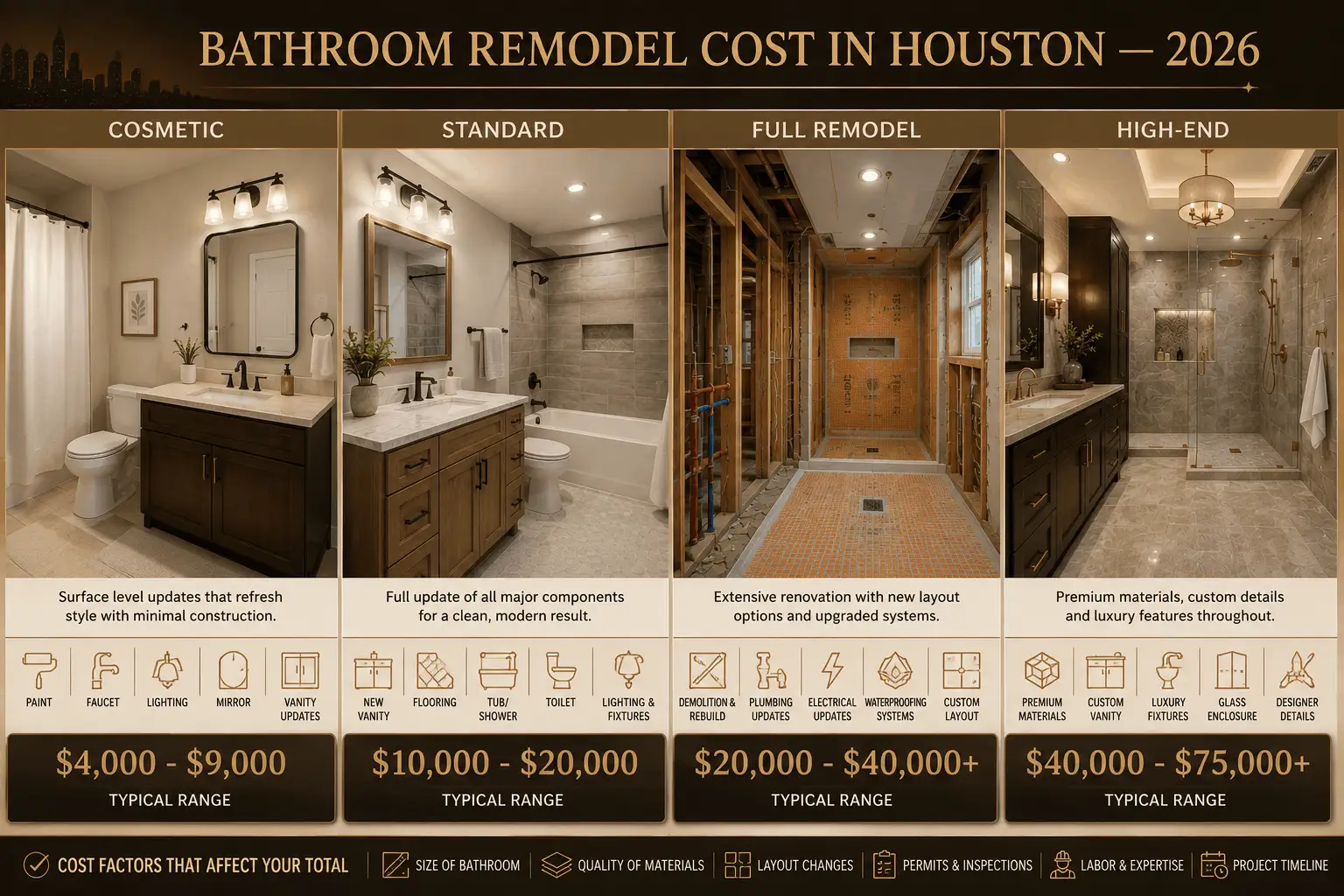
The bathroom remodel cost in Houston homeowners should plan for in 2026 can range from roughly $8,000 for a smaller, straightforward project to $40,000 or more for a substantial or premium remodel. Published Houston estimates vary because the scope, finish level, bathroom size, and amount of construction work can be very different from one project to another.
| Project level | Practical planning range | Typical scope |
|---|---|---|
| Cosmetic update | $5,000–$12,000 | Paint, selected fixtures, vanity, mirror, lighting and minor finish work |
| Standard remodel | $12,000–$25,000 | New tile, vanity, countertop, toilet, tub/shower and fixtures |
| Major/full remodel | $25,000–$40,000+ | Extensive demolition, waterproofing, upgraded finishes and system changes |
| High-end primary bath | $40,000–$75,000+ | Custom cabinetry, premium tile, specialty shower systems and luxury finishes |
These ranges are planning figures, not guaranteed quotes. For example, one current Houston cost guide reports an average remodel cost of $12,794, while another Houston remodeling source places standard projects around $15,000–$40,000. That difference illustrates why homeowners should compare scope rather than simply compare advertised averages.
A $15,000 estimate that keeps the existing plumbing layout is not equivalent to a $30,000 estimate that includes demolition, plumbing relocation, custom tile, electrical work, waterproofing, and higher-grade fixtures.
For homeowners still deciding what type of project they need, bathroom remodel vs. renovation is useful context before setting a budget. Once the scope is clear, a contractor can price the actual construction instead of a generic bathroom size.
A realistic Houston bathroom budget starts with project scope, so the next step is understanding what each price range typically includes.
What Does Each Bathroom Remodel Price Range Include?
The main difference between bathroom price ranges is the amount of construction and the quality of the materials being installed. A cosmetic update changes visible finishes, while a full remodel may involve demolition, waterproofing, plumbing, electrical work, new surfaces, and replacement fixtures.
Budget/cosmetic bathroom update
A budget bathroom update focuses mainly on visible improvements while keeping the existing layout and underlying systems intact. Typical work may include paint, a new vanity or countertop, faucets, lighting, mirrors, hardware, and selected fixture replacements.
This approach makes sense when the existing bathroom is functional and does not have significant moisture, plumbing, electrical, or structural problems. Keeping the wet areas and plumbing connections in place can help control labor and construction costs.
Mid-range full bathroom remodel
A mid-range remodel replaces most major finishes and fixtures while usually keeping the basic plumbing layout. The scope can include new flooring and shower tile, a vanity and countertop, toilet, tub or shower, lighting, exhaust fan, plumbing fixtures, and related installation.
This tier often gives homeowners a substantial functional and visual improvement without the added construction required to move every fixture. Current Houston guides commonly place standard remodels somewhere in the mid-teens through the $30,000 range, depending on selections and site conditions.
High-end or primary bathroom remodel
A high-end or primary bathroom remodel adds more labor-intensive construction and premium selections. Custom cabinetry, large-format or specialty tile, frameless glass, freestanding tubs, specialty shower controls, heated flooring, and upgraded lighting can all push the budget higher.
Primary bathrooms also contain more fixtures and surfaces, so there are more opportunities for costs to increase. Houston sources currently place premium primary-bath projects around $40,000–$75,000 or higher, depending on the scope and finish level.
Knowing the project tier gives you a starting budget, but the largest price differences usually come from the labor, system changes, materials, and conditions uncovered during construction.
Which Bathroom Remodeling Costs Have the Biggest Impact?
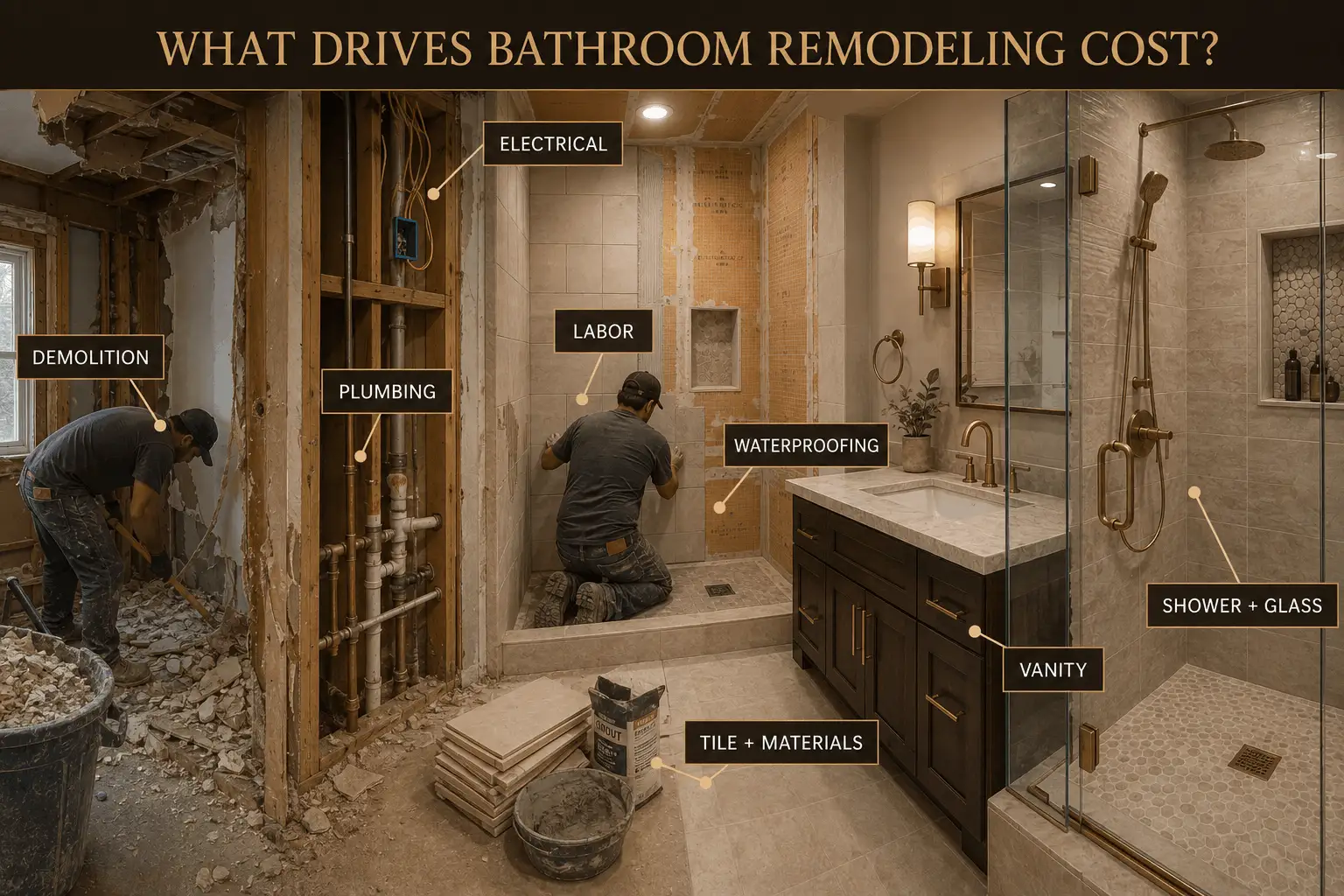
The biggest bathroom remodeling costs usually come from labor, demolition, plumbing and electrical changes, finish selections, and repairs behind existing surfaces. These factors can make two bathrooms with similar square footage produce very different contractor estimates.
Labor, demolition, and disposal
Labor covers much more than installing the finished fixtures. A full remodel can require demolition, debris removal, surface preparation, framing, waterproofing, tile installation, cabinetry, plumbing, electrical work, painting, and final fixture installation.
Demolition also requires site protection and disposal. Removing tile, tubs, cabinetry, drywall, and other heavy materials takes labor and creates waste that must be handled properly.
Plumbing and electrical changes
Moving a toilet, shower, tub, or sink can increase the budget because water supply and drainage systems must be changed. Houston homes can present additional challenges when plumbing changes require access through or around concrete slab construction. Current Houston cost guidance specifically identifies plumbing relocation as a significant consideration for small bathroom projects.
Electrical work can add cost when the remodel requires new lighting locations, outlets, exhaust fans, circuits, or other electrical improvements.
Tile, fixtures, vanity, and shower materials
Material selection creates a broad pricing range because homeowners can choose from economical products to highly customized finishes.
The main cost drivers include:
- Tile type, size, pattern, and installation complexity
- Stock, semi-custom, or custom vanity construction
- Countertop material and fabrication
- Tub, shower pan, glass, and shower hardware
- Faucets, toilets, lighting, mirrors, and accessories
A walk-in shower can also vary significantly in price depending on its size, waterproofing system, tile, glass, fixtures, and whether plumbing is relocated. Current Houston shower estimates show substantial variation between basic installations and custom tiled systems.
Waterproofing and hidden repairs
Waterproofing is one place where a low bid can become an expensive mistake. Shower walls, pans, niches, corners, and transitions need a properly installed water-management system before tile conceals the work.
During demolition, contractors may also find deteriorated framing, damaged substrates, or moisture-related repairs that were not visible during the initial walkthrough.
If you are considering a premium wet-area upgrade, steam shower installation should be treated as its own scope item because it adds specialized equipment, controls, installation requirements, and coordination.
The visible fixtures are only part of the price; the construction behind them often determines how far the final budget moves.
How Bathroom Size and Layout Affect Houston Remodel Costs
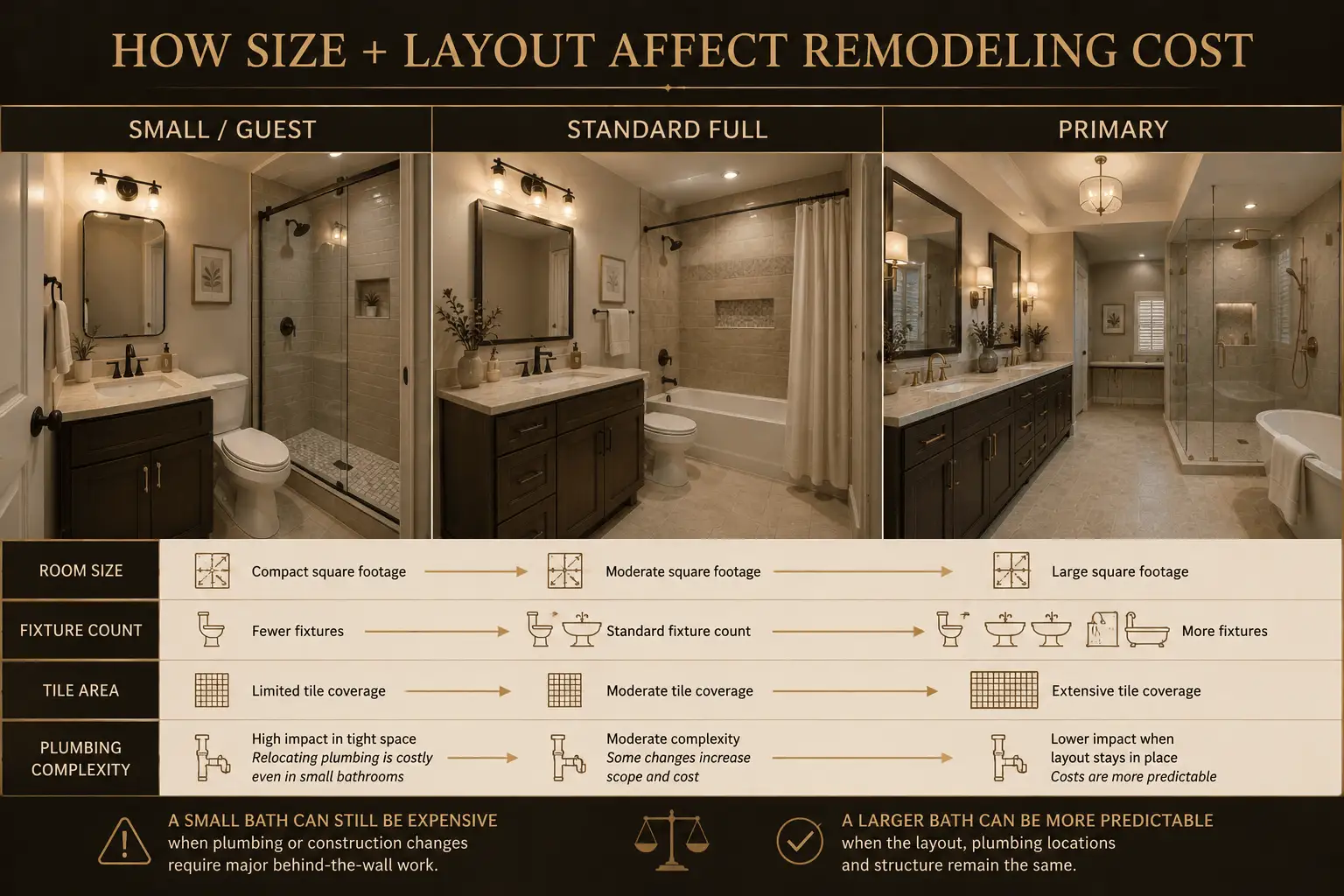
Bathroom size affects the amount of tile, flooring, cabinetry, and other materials required, but layout can have an even larger effect on labor. A small bathroom with relocated plumbing may cost more than a larger bathroom that keeps its existing fixture locations.
Small and guest bathrooms
Small bathrooms require fewer materials, but they still involve many of the same labor-intensive construction steps as larger rooms. Waterproofing, tile installation, demolition, plumbing, electrical work, and fixture installation do not disappear simply because the room is compact.
Current Houston data places small-bathroom remodeling at a broad range because project scope varies considerably. One 2026 Houston guide reports average small-bath remodeling costs of $6,409, with a much wider range depending on the work performed and existing conditions.
Standard full bathrooms
A standard full bathroom commonly includes a toilet, vanity, tub or shower, flooring, lighting, ventilation, and related finishes. Keeping those major plumbing connections near their existing positions can make the project more predictable.
This is often where homeowners can achieve a substantial upgrade without taking on the added expense of major layout changes.
Primary or master bathrooms
Primary bathrooms generally cost more because they tend to have more fixtures, larger tiled areas, additional storage, and upgraded shower or tub features.
Double vanities, separate showers and tubs, custom cabinetry, premium tile, specialty lighting, and larger glass enclosures can all expand the construction scope. The room’s size matters, but the number and complexity of features matter just as much.
Square footage influences material quantities, while layout and fixture count often determine how much construction labor the bathroom requires.
How Much Do Materials and Fixtures Add to the Total?
Materials and fixtures can change a bathroom budget dramatically because almost every major product category has multiple price levels. A useful estimate therefore needs to identify the expected finish level instead of simply allowing a generic amount for “materials.”
Tile affects both product and installation costs. A straightforward ceramic or porcelain layout is different from specialty tile, intricate patterns, numerous cuts, niches, accent bands, or large-format panels that require more careful handling and preparation.
Vanities and countertops also span a wide range. Stock cabinetry can help control costs, while custom cabinetry adds fabrication and installation. Countertop material, sink configuration, edge details, and backsplash requirements add further variation.
Wet-area selections can have an even larger impact. A basic tub surround is a different construction package from a tiled walk-in shower with custom glass, multiple controls, niches, premium waterproofing, and upgraded hardware.
| Selection | What changes the budget |
|---|---|
| Tile | Product price, quantity, pattern, cuts and installation |
| Vanity/cabinetry | Stock versus semi-custom or custom |
| Countertop | Material, size, fabrication and sink cutouts |
| Toilet | Standard versus specialty models |
| Shower/tub | Unit, waterproofing, tile, glass and plumbing |
| Faucets/fixtures | Quantity, finish and product quality |
| Lighting | Fixture quantity and electrical changes |
| Mirrors/accessories | Product quality and installation |
Water-efficient fixtures are another option to consider during selection. EPA WaterSense provides guidance on products designed to use water efficiently, which can help homeowners evaluate efficiency claims without confusing them with installation quality.
The best material budget is specific enough that your contractor knows exactly what level of product and installation you expect.
What Hidden Expenses Should Houston Homeowners Budget For?
Hidden bathroom remodeling expenses usually come from conditions that cannot be confirmed until existing finishes are removed. A responsible budget therefore allows for possible water damage, deteriorated substrates, old plumbing, electrical corrections, demolition costs, permit-related expenses, and legitimate scope changes.
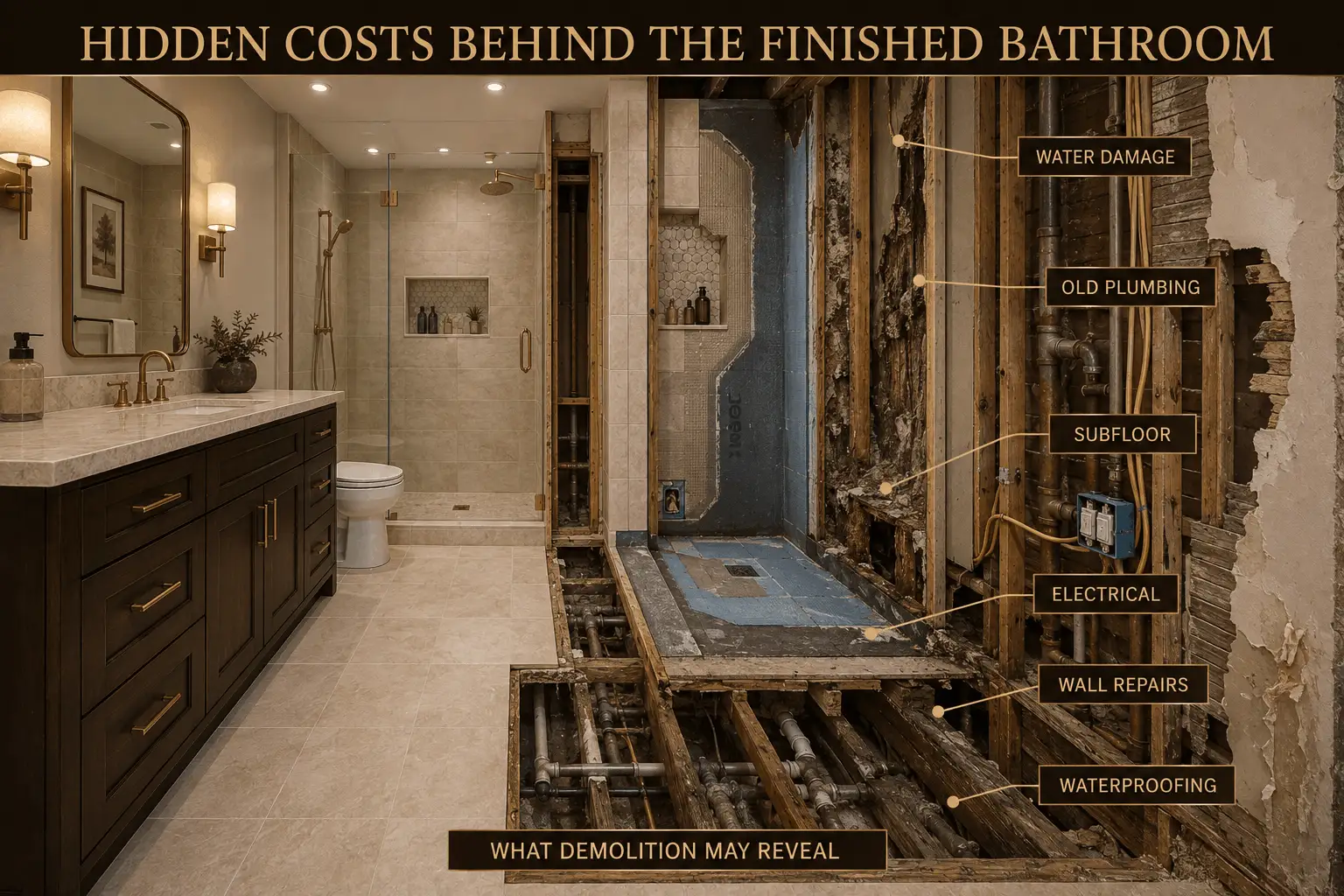
Before construction, review these potential cost areas:
- Water damage: Leaks around showers, tubs, toilets, or supply connections can affect framing and surrounding materials.
- Mold or moisture problems: Persistent moisture may require corrective work before new finishes are installed.
- Subfloor issues: Damaged or weakened flooring may need repair or replacement after demolition.
- Old plumbing: Existing pipes and connections may need attention when fixtures are replaced or relocated.
- Electrical upgrades: New lighting, ventilation, outlets, or circuits can expand the electrical scope.
- Demolition and disposal: Removing tile, cabinetry, tubs, and other heavy materials creates additional labor and disposal requirements.
- Permit costs: Required permits, plan review, and inspections can add separate project expenses.
- Scope changes: Owner-requested changes after construction starts can affect labor, materials, and scheduling.
- Contingency: A reserve protects the overall budget when legitimate concealed conditions appear.
Older homes deserve particular attention because demolition can expose previous repairs, aging systems, or moisture conditions that were hidden behind finished surfaces.
For a broader pre-construction checklist, homeowners can also review common bathroom remodel mistakes in Houston without turning this pricing guide into a separate mistakes article.
The goal of a contingency is not to expect problems; it is to keep one hidden condition from disrupting the entire remodeling budget.
Do Permits Add to Bathroom Remodeling Costs in Houston?
Yes, permits can add to a Houston bathroom remodeling budget when the proposed work requires them, and the exact requirements depend on the project’s scope and property. Plumbing, electrical, structural, and other construction changes may involve different permit and inspection requirements.
The City of Houston’s construction requirements include permitting provisions for residential alterations, remodels, and repairs, while its permitting resources provide information on applications, inspections, and applicable requirements.
For a bathroom remodel, permit questions are especially relevant when the project involves:
- Plumbing changes or relocation
- Electrical modifications
- Wall or structural changes
- Work affecting regulated building systems
- Construction requiring inspection by the appropriate department
Permit fees are not one universal bathroom-remodel charge. Houston publishes fee schedules, and the applicable amount can depend on the permit type and project circumstances.
Homeowners should also confirm the jurisdiction before assuming City of Houston rules apply. A property in another municipality within Greater Houston may have a different permitting authority and process.
Verify permit requirements for the specific property and construction scope before work begins, so permit and inspection costs are accounted for instead of becoming a surprise.
How Can You Keep a Houston Bathroom Remodel on Budget?
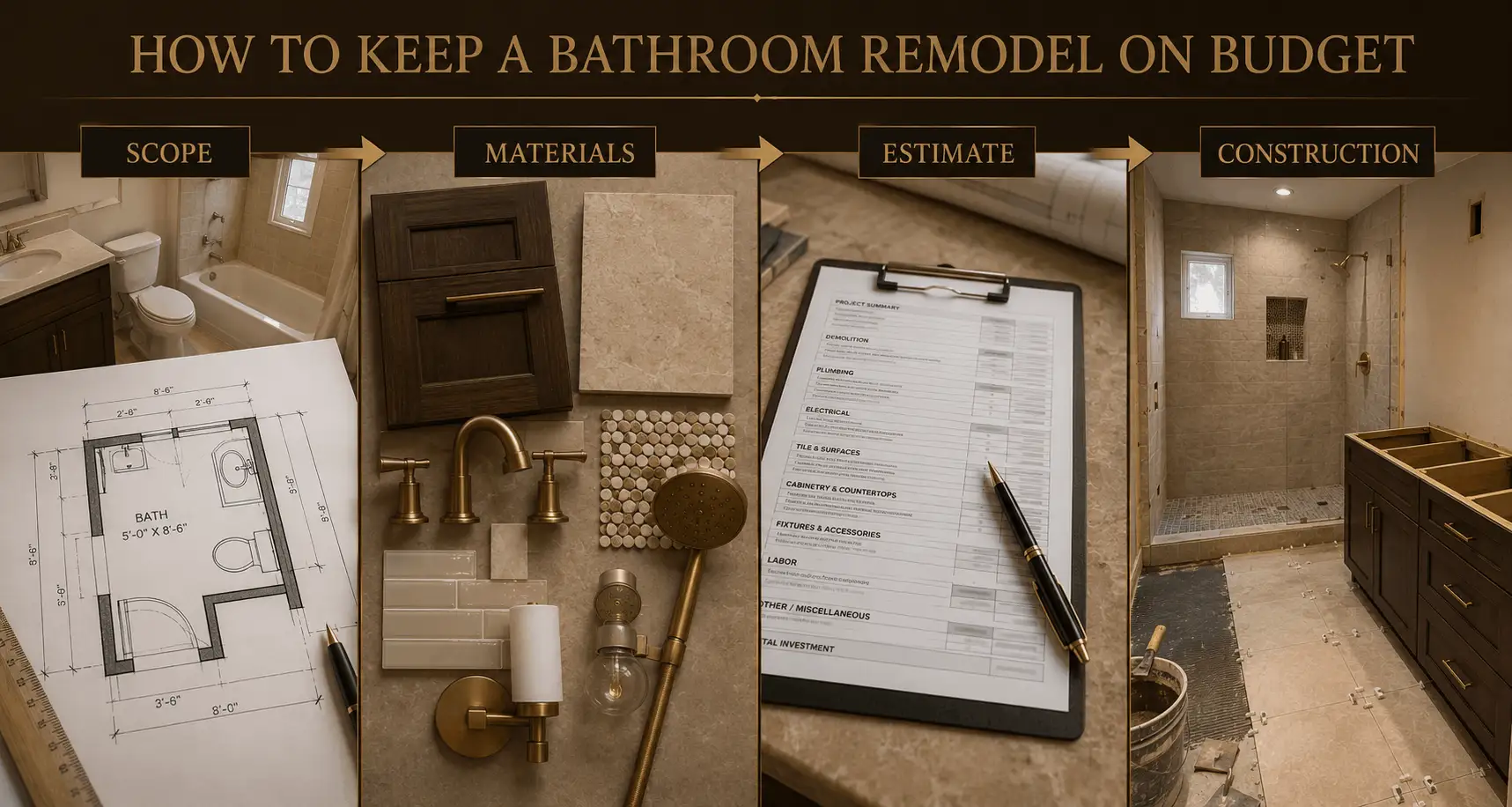
You can keep a Houston bathroom remodel on budget by defining the scope before construction, separating must-haves from upgrades, keeping the layout practical where possible, selecting materials early, maintaining a contingency, and comparing itemized estimates.
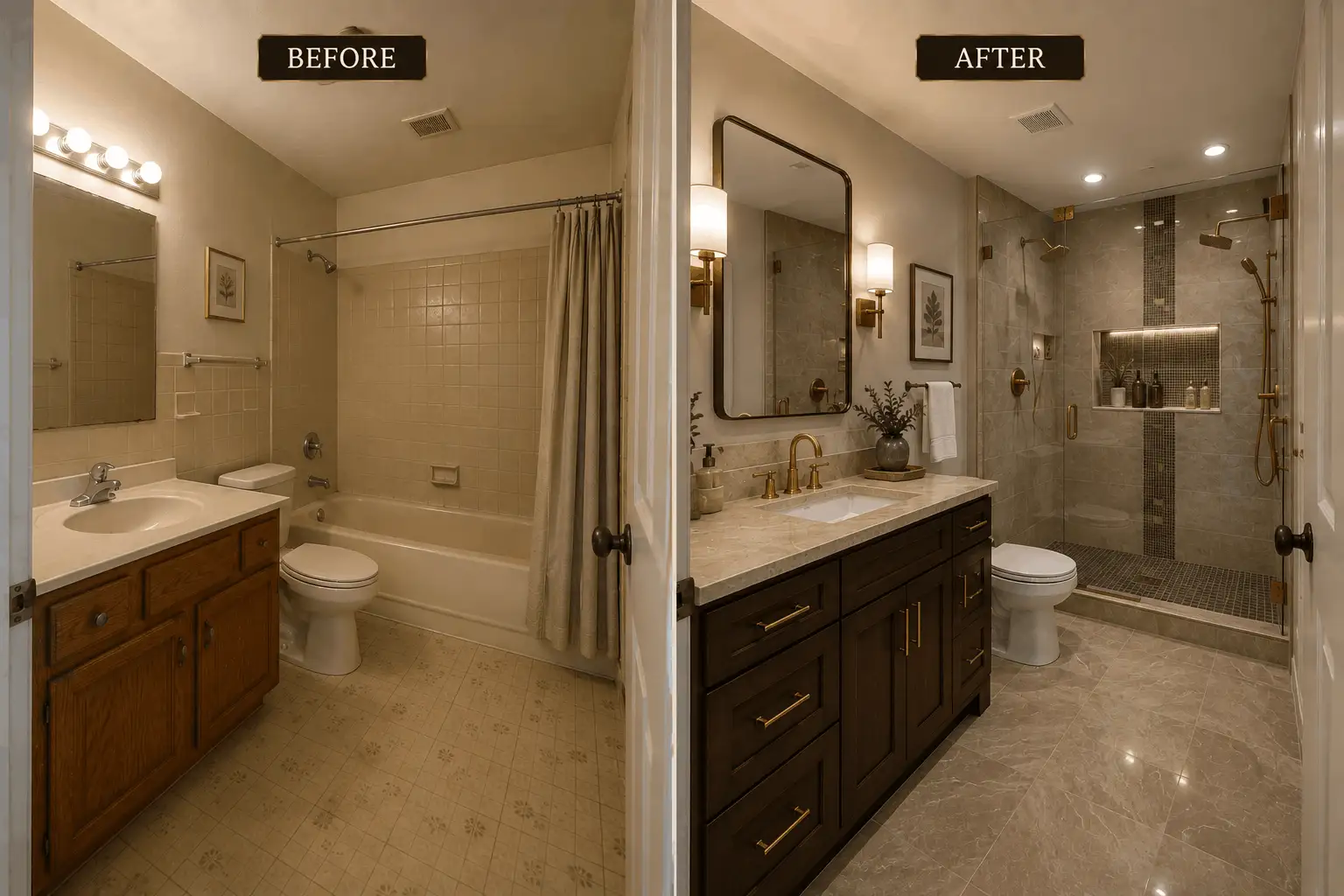
Use this process before signing a remodeling contract:
- Lock the layout where practical. Keeping the toilet, vanity, tub, and shower near existing connections can reduce invasive plumbing work.
- Separate must-haves from upgrades. Identify necessary repairs and functional improvements before adding premium features.
- Select materials before final pricing. Tile, vanities, countertops, fixtures, lighting, and glass should be identified before treating the budget as fixed.
- Maintain a contingency. Keep funds available for legitimate concealed conditions, especially in older bathrooms.
- Compare itemized estimates. Review demolition, labor, plumbing, electrical, tile, waterproofing, fixtures, disposal, and other major categories.
- Ask what is excluded. Confirm whether painting, delivery, demolition, disposal, permits, accessories, and concealed-condition repairs are included.
- Avoid unnecessary late changes. Changing materials or layout after ordering can create additional labor, restocking, and scheduling problems.
If bathroom work is part of a larger property renovation, full home remodeling in Houston should be budgeted as a separate project scope rather than mixed into a bathroom-only estimate.
The lowest number is not necessarily the lowest-cost project. An estimate that leaves out waterproofing, demolition, disposal, permits, or finish installation can appear attractive until those items have to be added later.
A professional estimate should show what is included, what is excluded, which selections are allowances, and which conditions could change the final price.
A controlled bathroom budget comes from a clearly defined scope and comparable estimates, making a project-specific contractor estimate the logical next step.
Frequently Asked Questions
Is a bathroom remodel worth it for a Houston rental property?
Yes, a bathroom remodel can be worthwhile for a Houston rental property when the improvements solve functional problems and fit the property’s expected return. Durable flooring, reliable fixtures, ventilation, and easy-to-maintain finishes often make more financial sense than highly personalized upgrades. The right scope should balance tenant appeal, maintenance, neighborhood expectations, and long-term ownership costs.
Should I get a fixed-price bathroom remodeling estimate?
Yes, you should seek a clearly defined estimate that identifies the included scope, allowances, exclusions, and conditions that could change the price. A fixed figure is most useful when materials and construction requirements are known. Ask how concealed damage, owner-selected upgrades, permit changes, and other scope adjustments will be handled before signing.
Can I remodel a bathroom in phases to reduce the upfront cost?
Yes, a bathroom can sometimes be remodeled in phases when the work can be safely separated into logical construction stages. However, phasing may increase total labor or require temporary finishes to be removed later. Discuss the complete end goal first so early work does not create unnecessary demolition, duplicated installation, or incompatible material selections.
Does keeping the existing bathroom layout save money?
Yes, keeping the existing bathroom layout often reduces costs because major plumbing connections can remain near their current locations. Savings depend on the home’s existing conditions and project’s scope. Moving a toilet, shower, or tub can require additional plumbing work and, in some Houston homes, more invasive access to concealed or slab-based systems.
Should bathroom materials be purchased before hiring a contractor?
No, homeowners generally should not purchase all bathroom materials before hiring a contractor unless the contractor specifically recommends that approach. Material compatibility, quantities, lead times, installation requirements, and site measurements all matter. Coordinating selections with the construction plan helps ensure products arrive when needed and are suitable for the intended installation.
How much contingency should I keep available for a bathroom remodel?
A contingency of roughly 10% to 20% is a common planning allowance for remodeling, although older or uncertain bathrooms may justify a larger reserve. The money should cover legitimate concealed conditions rather than planned upgrades. Once demolition begins, damaged substrates, moisture problems, outdated plumbing, or other repairs may require additional work.
Conclusion
Bathroom remodeling costs in Houston vary because the work behind the finished surfaces can be very different from one home to another. Current 2026 Houston sources show that straightforward projects can fall in the lower thousands, while standard remodels commonly reach the mid-teens or higher and premium primary bathrooms can move well beyond $40,000.
The most useful budget considers scope, layout, labor, materials, plumbing, electrical work, waterproofing, permits, and hidden conditions together. Instead of choosing a contractor from a headline price alone, compare detailed estimates that clearly show what is included.
If you’re ready to establish a realistic budget for your Houston bathroom, Houston Builder Pro can review your planned scope and prepare a project-specific estimate. Call (713) 551-4090 to discuss the work and determine the appropriate next step.